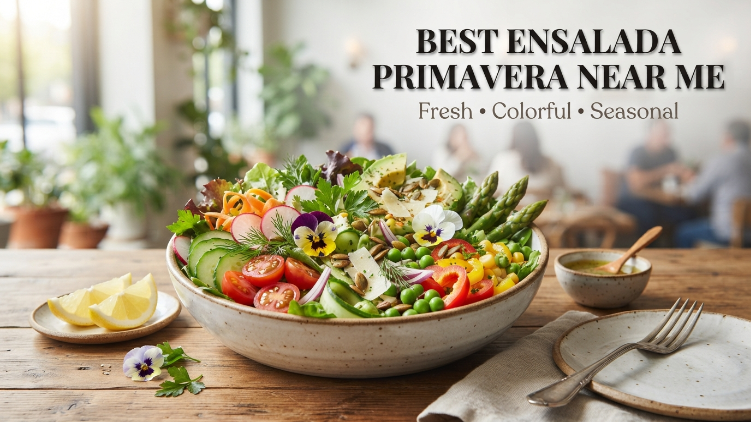

A well-made ensalada primavera is all about freshness, color, texture, and balance. The name generally refers to a spring-style salad, but there is no single universal recipe. Depending on the restaurant or region, it may feature leafy greens, tomatoes, cucumber, peppers, peas, asparagus, radishes, carrots, corn, avocado, fruit, herbs, or a light dressing.
When looking for the best ensalada primavera near me, understanding what makes this salad distinctive can make it easier to judge whether a local menu offers the style you actually want.
| Key Factor | What to Look For |
|---|---|
| Main base | Fresh lettuce or mixed greens |
| Vegetables | Seasonal, crisp, colorful produce |
| Texture | A combination of crunchy and tender ingredients |
| Dressing | Fresh lemon, herb, vinaigrette, or light creamy dressing |
| Protein | Optional eggs, beans, tofu, seafood, or poultry |
| Serving style | Chilled, room temperature, or lightly warm |
| Flavor profile | Fresh, bright, mildly sweet, and savory |
What Is Ensalada Primavera?
“Ensalada primavera” translates broadly to “spring salad.” Unlike a standardized dish with one fixed ingredient list, it describes a family of fresh vegetable salads built around seasonal produce.
One version combines potatoes, asparagus, green beans, spinach, peas, artichokes, radishes, spring onions, and dill, while another may use lettuce, tomatoes, cucumber, carrots, peppers, and other vegetables.
This flexibility is one reason the dish can look very different from one restaurant to another.
Common Ingredients
Typical ingredients include:
- Lettuce or mixed leafy greens
- Tomatoes or cherry tomatoes
- Cucumbers
- Radishes
- Carrots
- Peppers
- Green onions
- Peas
- Corn
- Asparagus
- Spinach
- Fresh herbs
Some interpretations also include avocado, nuts, seeds, cheese, eggs, tofu, seafood, or another protein source.
What Makes a Good Ensalada Primavera?
The quality of the ingredients matters more than an elaborate recipe. Fresh vegetables should retain their natural color, crunch, and individual flavors.
Freshness Comes First
Leafy greens should look crisp rather than wilted. Cucumbers and radishes should provide a clean crunch, while tomatoes should be ripe enough to contribute flavor without making the salad watery.
Seasonal vegetables can also add more variety. Some versions use lightly cooked asparagus, green beans, peas, or potatoes alongside raw greens.
Balance Matters
A satisfying salad usually combines several contrasting elements:
- Crunch: radishes, cucumber, carrots, seeds
- Tenderness: peas, asparagus, potatoes
- Sweetness: corn, tomatoes, fruit
- Acidity: lemon juice or vinegar
- Richness: avocado, cheese, nuts, or a creamy dressing
- Herbal freshness: parsley, dill, basil, or similar herbs
This balance keeps the salad interesting from the first bite to the last.
How to Find the Best Ensalada Primavera Near Me
When checking nearby restaurants, cafés, salad shops, or casual dining locations, look beyond the dish name.
Read the Ingredient List
A menu description can tell you much more than the word “salad.” Look for specific ingredients and consider whether they match your preferences.
For example, one restaurant might serve a simple combination of spring greens and tomatoes, while another may add corn, onions, tofu, olives, cucumber, and a fruit-based vinaigrette.
Check the Dressing
Dressing can completely change the character of a spring salad.
A lemon-and-olive-oil dressing creates a light, acidic profile. Herb vinaigrettes add freshness, while yogurt-based dressings create a creamier texture. Some recipes use blended peas and yogurt as the base of the dressing.
If you prefer the vegetables to remain the main attraction, a lighter dressing is usually the better choice.
Different Styles You May Encounter
There is no single definition of ensalada primavera, so regional and restaurant interpretations can vary considerably.
Fresh Vegetable Style
This version focuses on raw produce such as lettuce, tomatoes, cucumber, carrots, peppers, and onions. It is crisp, refreshing, and relatively simple.
Warm Vegetable Style
Some recipes lightly cook vegetables before combining them with fresh greens. Asparagus, potatoes, green beans, and artichokes can be sautéed or boiled, then mixed with spinach, peas, or other fresh ingredients.
Fruit-Forward Style
Fruit can add sweetness and acidity. Mango, kiwi, citrus, strawberries, or other fresh fruit can create a noticeably different spring salad.
Protein-Rich Style
A salad can become more substantial when ingredients such as eggs, tofu, seafood, beans, or poultry are included. The result works better as a complete meal rather than simply a side dish.
How to Judge a Restaurant Version
If you’re comparing several places, consider five practical details.
- Ingredient freshness: Vegetables should look crisp and vibrant.
- Variety: A good salad should have several complementary textures.
- Dressing balance: It should enhance the vegetables rather than overpower them.
- Portion composition: The bowl should contain a meaningful amount of fresh produce.
- Customization: Being able to adjust dressing or omit unwanted ingredients can be useful.
A colorful salad is not automatically a good one. The best version has balanced flavors and ingredients that still taste distinct.
Making Ensalada Primavera at Home
Preparing this type of salad is straightforward because the ingredients can be adapted to what is fresh and available.
Start with a base of lettuce, spinach, or mixed greens. Add several vegetables with different colors and textures. Radishes, cucumber, carrots, tomatoes, peas, asparagus, and spring onions are useful choices.
For a simple dressing, combine fresh lemon juice or vinegar with olive oil, then season with herbs, salt, and pepper. A spring salad recipe can also use a yogurt-based or blended vegetable dressing when a creamier result is preferred.
The key is to avoid drowning the vegetables in dressing. Add a modest amount, toss gently, and adjust according to taste.
Why the Dish Is So Versatile
Ensalada primavera works because its basic concept is adaptable. It can be a light starter, a side dish, or a more substantial meal depending on the ingredients.
For a lighter plate, focus on leafy greens and fresh vegetables. For more substance, add beans, eggs, tofu, grains, nuts, seeds, or another suitable protein. Fruit can introduce sweetness, while fresh herbs and citrus provide brightness.
This versatility also means that two restaurants can use the same name while serving substantially different salads.
The Bottom Line
Finding the best ensalada primavera near me is less about locating one universally correct recipe and more about identifying the version that delivers fresh ingredients, balanced textures, and a dressing that complements rather than dominates the vegetables.
Look closely at menu descriptions, ingredient combinations, preparation style, and dressing options. Whether you prefer a crisp vegetable salad, a warm seasonal version, or a protein-rich meal, the broad definition of ensalada primavera gives you plenty of room to find a combination that suits your taste.

Asad writes about the things that move the world forward — and the people brave enough to build them. Specializing in tech, business, news, and lifestyle content, he’s spent years turning complicated industries into compelling stories for magazines, digital platforms, and brand publications.
He believes great writing doesn’t just inform — it connects. That’s why editors keep coming back: he has a knack for making a SaaS deep-dive feel as gripping as a profile in GQ and a lifestyle feature read with the precision of The Economist.
He currently lives on strong Wi-Fi and stronger opinions about typography.