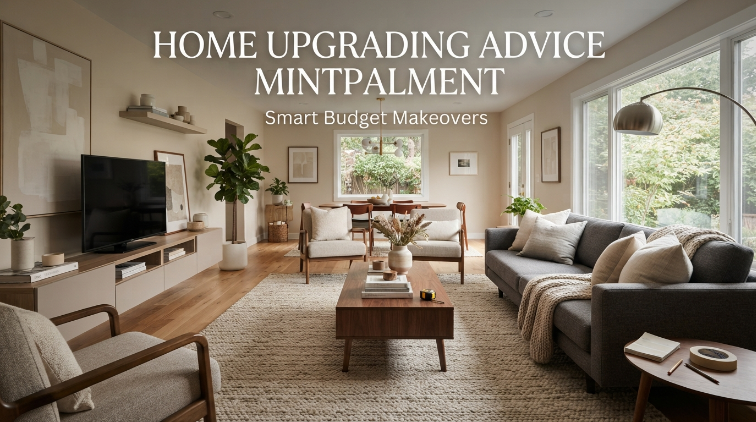

A stylish home does not always require a major renovation. Home upgrading advice MintPalMent centers on a simple idea: use thoughtful design changes to create a more polished, spacious, modern environment without relying on expensive structural work. Instead of tearing out walls or replacing everything at once, this approach focuses on furniture placement, visual balance, scale, texture, and carefully chosen DIY improvements.
The philosophy is especially useful for homeowners and renters who want noticeable results while keeping projects manageable. A room can look dramatically different simply by removing visual clutter, changing how furniture sits within the space, or introducing better proportions.
| Key Area | MintPalMent Approach |
|---|---|
| Design goal | Modern, high-impact appearance |
| Main strategy | Prioritize visual changes |
| Furniture | Reduce bulky profiles |
| Sofa placement | Create space away from walls |
| Rugs | Use larger, properly scaled designs |
| Remodeling style | Low-cost and practical |
| Structural work | Minimize unnecessary demolition |
| DIY focus | Simple improvements with visible results |
The Philosophy Behind Home Upgrading Advice MintPalMent
Focus on Impact Rather Than Demolition
Traditional remodeling can quickly become complicated because homeowners often assume that dramatic results require dramatic construction. The MintPalMent approach takes the opposite position.
A room’s appearance is influenced by several elements that do not require construction crews or extensive alterations. Furniture scale, circulation paths, lighting, color relationships, floor coverage, and negative space can completely change how an interior feels.
This makes visual prioritization an important part of affordable home improvement. Rather than attempting to change everything, identify the features that dominate the room and improve those first.
Think About the Room as a Whole
Good interior design is not simply about individual attractive objects. A beautiful sofa can still look awkward if it overwhelms the room. An expensive rug can appear undersized if it does not relate properly to the furniture.
The goal is to create relationships between objects. Furniture should support movement, rugs should reinforce seating arrangements, and open areas should provide visual breathing room.
Start by Removing Bulky Furniture
Create More Visible Floor Space
One of the simplest upgrades is also one of the least expensive: remove furniture that does not contribute enough to the room.
Oversized cabinets, unnecessary side tables, heavy seating, and rarely used decorative pieces can make an otherwise reasonable room feel cramped. Removing just one or two large items may expose more flooring and create clearer pathways.
This does not mean making a room completely empty. Instead, every major piece should have a purpose.
Ask whether an item:
- Supports daily activities
- Improves comfort
- Provides useful storage
- Contributes to the room’s visual balance
- Fits the available scale
If an object performs none of these functions, removing it may create a stronger improvement than replacing it with another piece.
Preserve Natural Pathways
Furniture arrangement should allow people to move naturally through the room. Narrow passages around sofas, tables, and cabinets can make a space feel smaller than it actually is.
Clear circulation paths improve both practicality and visual openness. This is particularly valuable in compact living rooms, apartments, and multipurpose spaces.
Use the Floating Furniture Technique
Move Seating Away From the Walls
A common layout habit is pushing every sofa and chair directly against the walls. While this may seem like the best way to maximize floor space, it can sometimes make the arrangement feel disconnected.
Floating furniture means positioning sofas and chairs slightly away from the walls. Even a modest gap can establish a more intentional seating zone.
The technique can make the room feel deeper because the furniture becomes part of a defined arrangement rather than simply lining the perimeter.
Build a Conversation Area
Instead of arranging every piece around the walls, consider creating a central social zone. A sofa, chairs, coffee table, and rug can work together as one visual composition.
The arrangement should still leave comfortable walking space around it. The objective is not to fill the center of the room but to give the furniture a clear relationship.
Choose Rugs According to Furniture Scale
Avoid Undersized Area Rugs
An undersized rug can make an otherwise well-designed room look fragmented. If the rug sits alone in the center with all furniture surrounding it but not touching it, the seating arrangement may lack cohesion.
A larger rug can visually connect the major furniture pieces.
The MintPalMent-inspired approach recommends selecting an area rug large enough for at least the front legs of major seating pieces to rest securely on it. This helps anchor the furniture and establish a unified zone.
Consider Proportion Before Pattern
Pattern and color are important, but size should come first. A beautiful rug that is too small for the room can create an awkward visual relationship.
Before choosing a rug, measure the seating area and consider how much floor should remain visible around its edges. Proportion is often more important than decoration.
Make High-Impact Changes Before Expensive Ones
Improve What Already Exists
Budget-friendly remodeling works best when existing elements are treated as assets rather than problems.
A dated room may benefit from rearranging furniture, decluttering surfaces, updating hardware, improving lighting, or changing small decorative details. These changes can produce a more contemporary appearance without replacing every major component.
This approach also reduces unnecessary waste because usable furniture and materials remain in service.
Prioritize the Most Visible Areas
Not every part of a home needs equal attention. Focus first on spaces that dominate everyday life, such as the living room, entryway, dining area, or primary workspace.
A few carefully chosen improvements can have more influence than dozens of minor decorative changes scattered throughout the property.
Use Lighting to Change the Atmosphere
Lighting can dramatically affect how furniture, wall colors, textures, and architectural features are perceived.
A room with only one harsh overhead source may feel flat, while several softer sources can create depth. Floor lamps, table lamps, wall lighting, and strategically positioned fixtures can establish different layers.
Consider three basic functions:
- Ambient lighting: Provides overall illumination.
- Task lighting: Supports reading, cooking, working, or other activities.
- Accent lighting: Draws attention to artwork, architectural details, or decorative features.
Better lighting can therefore complement furniture changes without requiring structural remodeling.
Add Texture Instead of Adding Clutter
Create Visual Interest Carefully
A modern room does not need dozens of accessories. Texture can provide depth without overwhelming the space.
Wood, woven materials, soft textiles, ceramics, glass, and natural-looking finishes can create contrast while maintaining a restrained appearance.
The key is balance. If every surface contains decorative objects, the room can quickly lose the openness that budget-friendly upgrading aims to create.
Use Repetition for Cohesion
Repeating a material, shape, or subtle color in several areas can make a room feel more coordinated. For example, similar wood tones can appear in furniture and small accessories, while complementary textiles can connect the seating area.
This creates continuity without requiring a complete redesign.
Where DIY Remodeling Makes the Most Sense
Choose Projects With Limited Structural Risk
The strongest low-cost projects are often those that can be completed without changing the home’s major structure. Painting, furniture refinishing, hardware replacement, organization, decorative treatments, and layout changes can provide substantial visual improvements.
Structural work should be approached differently because it may involve electrical systems, plumbing, load-bearing components, permits, or professional expertise.
A sensible improvement strategy recognizes the difference between cosmetic transformation and construction.
Common Mistakes to Avoid
Even an affordable design philosophy can produce poor results if basic principles are ignored.
Common mistakes include:
- Buying furniture without measuring the room
- Choosing rugs that are too small
- Filling every empty corner
- Keeping oversized furniture simply because it is available
- Pushing every seating piece against the walls
- Mixing too many unrelated styles
- Treating decoration as more important than function
- Starting expensive work before trying simpler alternatives
The solution is usually to step back and assess the room as a complete composition.
How to Apply the Approach Room by Room
Living Room
Begin by removing unnecessary furniture and establishing a clear seating zone. Float the sofa when the room permits, introduce an appropriately scaled rug, and improve lighting.
Bedroom
Prioritize circulation, balanced furniture placement, useful storage, and calming visual layers. Avoid allowing large pieces to dominate the available floor area.
Entryway
Keep the entrance functional and uncluttered. A narrow storage solution, suitable lighting, and a simple focal element can make the area feel more intentional.
Home Office
Arrange the desk around natural movement and available light. Keep storage practical and limit decorative items that consume valuable working space.
The Long-Term Value of Thoughtful Upgrading
The most useful lesson from home upgrading advice MintPalMent is that better design does not necessarily depend on greater spending. A room’s perceived quality often comes from proportion, organization, composition, and restraint.
Rather than approaching remodeling as a race to replace everything, homeowners can work systematically. Remove what overwhelms the room, reposition what remains, improve scale, introduce appropriate texture, and then decide whether additional changes are genuinely necessary.
This method also makes home improvement easier to manage because projects can be completed in stages. One successful layout change can reveal the next priority without forcing a complete renovation all at once.
Conclusion
Home upgrading advice MintPalMent offers a practical framework for creating a more modern and spacious interior through intelligent, low-cost changes. Removing bulky furniture, floating seating away from walls, selecting properly scaled rugs, improving lighting, and reducing visual clutter can transform a room without major demolition.
The central principle is straightforward: maximize the impact of what you already have before assuming that everything needs to be replaced. When furniture, space, proportion, lighting, and texture work together, even modest improvements can produce a remarkably polished home.
Frequently Asked Questions
What is the main idea behind Home Upgrading Advice MintPalMent?
It emphasizes affordable visual improvements rather than expensive structural remodeling. Furniture layout, scale, decluttering, lighting, and simple DIY changes are central to the approach.
Why should furniture be moved away from walls?
Floating furniture can create a more defined seating arrangement and may make a room feel deeper and more intentional.
How large should an area rug be?
The rug should generally be large enough for at least the front legs of the main furniture pieces to sit on it, helping visually connect the seating area.
Does affordable upgrading require replacing furniture?
No. Rearranging, removing oversized pieces, improving lighting, and changing the way existing furniture is used can sometimes create significant improvements without replacement.
What should be upgraded first?
Start with the room’s most visually dominant problems, such as overcrowding, poor furniture placement, insufficient lighting, or an undersized rug. Addressing these issues first can create the greatest visible change.

Asad writes about the things that move the world forward — and the people brave enough to build them. Specializing in tech, business, news, and lifestyle content, he’s spent years turning complicated industries into compelling stories for magazines, digital platforms, and brand publications.
He believes great writing doesn’t just inform — it connects. That’s why editors keep coming back: he has a knack for making a SaaS deep-dive feel as gripping as a profile in GQ and a lifestyle feature read with the precision of The Economist.
He currently lives on strong Wi-Fi and stronger opinions about typography.