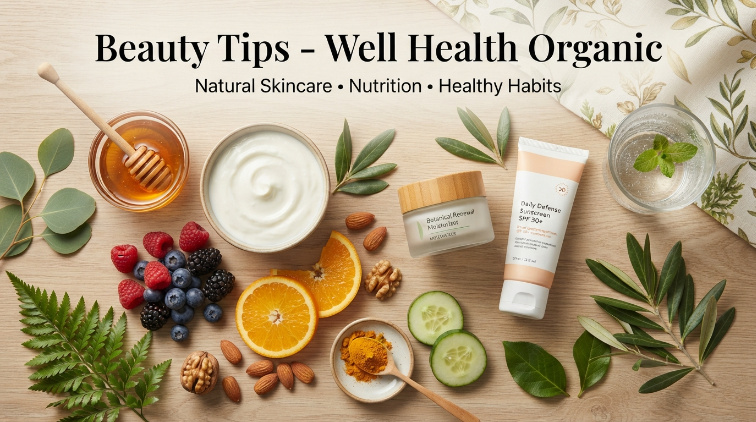

Healthy-looking skin is rarely the result of one miracle ingredient. The ideas behind beauty tips – well health organic.com focus on a broader approach: gentle skincare, nourishing foods, adequate hydration, sun protection, quality sleep, and consistent daily habits. Natural ingredients such as cucumber, yogurt, honey, turmeric, almonds, walnuts, berries, and citrus fruits can complement a sensible skincare routine, but their benefits work best when combined with evidence-based skin care.
| Key Area | Practical Approach | Main Benefit |
|---|---|---|
| Cleansing | Use a gentle, non-stripping cleanser | Removes dirt and excess oil |
| Hydration | Moisturize regularly and drink according to thirst | Supports the skin barrier |
| Nutrition | Eat fruits, vegetables, nuts, and protein-rich foods | Supplies essential nutrients |
| Sun protection | Use broad-spectrum SPF 30+ | Helps prevent UV damage |
| Sleep | Aim for 7–9 hours | Supports overall recovery |
| Natural masks | Use simple ingredients carefully | Can provide temporary soothing effects |
Understanding the Well Health Organic Beauty Philosophy
The central idea behind Well Health Organic beauty tips is that external skincare and internal health should work together. Instead of building a complicated routine around numerous products, the approach emphasizes consistency and relatively simple habits.
This philosophy can be useful because healthy skin depends on several interconnected factors. The skin barrier helps retain moisture and protects against environmental irritants, while nutrition supplies the body with nutrients needed for normal tissue maintenance.
However, “natural” does not automatically mean safer or more effective. Plant-based ingredients can cause irritation or allergic reactions, especially when applied directly to sensitive skin. A balanced approach is therefore more practical than assuming every homemade remedy is universally suitable.
Why consistency matters
A simple routine followed regularly is generally easier to maintain than a long list of treatments. Gentle cleansing, moisturizing, daily sun protection, adequate sleep, and a balanced diet form a stronger foundation than constantly changing remedies.
Gentle Cleansing and Organic-Inspired Skincare
Cleansing removes sweat, dirt, excess sebum, sunscreen, and cosmetic residue. The goal is not to leave the face feeling extremely tight or dry. Over-cleansing can disturb the skin barrier and contribute to irritation.
Some versions of the Well Health Organic approach mention coconut oil or olive oil as natural makeup removers. Oils can help dissolve oil-based cosmetic products, but they are not ideal for everyone. People with acne-prone skin may find certain oils uncomfortable or unsuitable.
A gentle facial cleanser designed for the individual’s skin type is often the more predictable option. Makeup should also be removed before sleeping, particularly around the eyes.
Turmeric, honey, cucumber, and yogurt masks
Traditional DIY masks can make skincare feel simple and accessible. Turmeric is known for containing curcumin and has been studied for its anti-inflammatory properties, while honey has moisturizing and antimicrobial characteristics.
Cucumber contains a high percentage of water and can feel cooling on the skin. Yogurt contains lactic acid, although the concentration and formulation of a homemade yogurt mask are not controlled like those of a formulated skincare product.
These ingredients should never be treated as guaranteed cures for acne, pigmentation, or other skin conditions. Patch testing is sensible, and products should be removed immediately if burning, itching, swelling, or significant redness develops.
Hydration Is About the Skin Barrier
Hydration is one of the most important parts of maintaining comfortable skin. Applying moisturizer after cleansing can help reduce water loss and support the skin barrier.
Moisturizer works particularly well when applied to slightly damp skin because it helps retain water already present at the surface. This does not mean a moisturizer literally locks in “10 times more moisture,” a claim sometimes repeated in beauty content without reliable evidence.
Drinking water is also essential for normal body function, but there is no universal requirement that every person must drink exactly two or three liters each day. Fluid needs vary with body size, climate, physical activity, diet, and other factors.
Nutrition and the Connection Between Diet and Skin
The nutritional side of beauty tips – well health organic.com emphasizes colorful fruits, vegetables, yogurt, nuts, and other nutrient-rich foods. This is a sensible foundation because the skin needs adequate protein, vitamins, minerals, essential fatty acids, and overall energy to maintain normal structure and function.
Antioxidant-rich foods
Berries, oranges, papaya, peppers, leafy greens, and other colorful produce provide antioxidants and nutrients such as vitamin C. Vitamin C is involved in collagen production and normal wound healing.
Eating a varied diet is more useful than relying on one “beauty food.” Different foods provide different nutrients, and dietary variety makes it easier to meet nutritional requirements.
Nuts and healthy fats
Almonds and walnuts provide nutrients and unsaturated fats. Walnuts also contain alpha-linolenic acid, a plant-based omega-3 fatty acid.
Rather than viewing nuts as a treatment for dry skin, it is better to consider them part of an overall nutritious diet. Adequate dietary fat is important for normal health, while severely restrictive eating patterns can make it harder to obtain essential nutrients.
Yogurt and digestive health
Yogurt containing live cultures can contribute beneficial bacteria to the diet. Its nutritional value also includes protein and, depending on the product, calcium and other nutrients.
The relationship between digestive health and skin is an active area of scientific research, but eating yogurt should not be presented as a guaranteed solution for acne, pigmentation, or other specific skin problems.
Sun Protection Should Be a Daily Priority
Among all the habits discussed in natural beauty routines, sun protection deserves particular attention. Ultraviolet radiation contributes to premature skin aging, uneven pigmentation, and skin damage.
A broad-spectrum sunscreen with SPF 30 or higher can help reduce exposure to both UVA and UVB radiation. Sunscreen works alongside physical measures such as shade, protective clothing, and avoiding prolonged direct sunlight.
Mineral sunscreen ingredients such as zinc oxide and titanium dioxide are commonly used in formulations designed to protect against UV radiation. The important consideration is reliable broad-spectrum protection rather than whether a product is marketed as “natural.”
Sleep, Stress, and Everyday Lifestyle Habits
Skin does not exist separately from the rest of the body. Poor sleep, prolonged stress, an unbalanced diet, and other lifestyle factors can influence overall well-being and may affect how the skin looks and feels.
Adults are generally advised to aim for around seven to nine hours of sleep per night. Maintaining a consistent sleep schedule, limiting excessive screen exposure before bedtime, and creating a comfortable sleeping environment can support better rest.
Exercise and regular physical activity also contribute to overall health. After sweating heavily, cleansing the skin can help remove sweat and residue, particularly for people prone to clogged pores.
Common Mistakes to Avoid With Natural Beauty Remedies
Natural skincare can become problematic when simple ingredients are treated as medical treatments or used too aggressively.
Avoid these common mistakes:
- Applying concentrated essential oils directly to the face.
- Using abrasive scrubs that damage the skin barrier.
- Leaving acidic or irritating ingredients on the skin for long periods.
- Assuming a homemade remedy can replace treatment for persistent acne or eczema.
- Skipping sunscreen because other ingredients are considered natural.
- Using the same routine regardless of whether the skin is dry, oily, sensitive, or combination.
- Expecting overnight results from dietary or skincare changes.
A new ingredient should be introduced cautiously, particularly when the skin is sensitive or reactive.
Building a Simple Daily Beauty Routine
A practical routine based on the principles of beauty tips – well health organic.com does not need to be complicated.
Morning
Begin with gentle cleansing or simply rinsing the face if appropriate for the skin type. Follow with moisturizer and broad-spectrum SPF 30+ sunscreen. Breakfast can include protein, fruit, whole grains, nuts, or other nutrient-dense foods.
Evening
Remove makeup and sunscreen before bed, cleanse gently, and apply a suitable moisturizer. Avoid repeatedly experimenting with homemade treatments when the skin is already irritated.
Weekly approach
Natural masks can be occasional additions rather than the foundation of skincare. If a mask causes discomfort, discontinue it. Consistency with basic skincare habits matters more than frequently adding new remedies.
When Natural Tips Are Not Enough
Home skincare has limits. Persistent acne, severe irritation, unexplained rashes, rapidly changing pigmentation, painful lesions, or other concerning changes deserve professional evaluation.
A dermatologist can identify whether the problem involves acne, dermatitis, rosacea, hyperpigmentation, infection, or another condition and recommend appropriate treatment.
Natural ingredients can complement healthy routines, but they should not delay appropriate medical care.
Final Thoughts on Beauty Tips – Well Health Organic
The most useful lesson from beauty tips – well health organic.com is that healthy-looking skin is influenced by more than what is applied to the face. Gentle cleansing, moisturizing, nutritious foods, adequate fluids, regular sleep, and consistent sun protection provide a practical foundation.
Traditional ingredients such as honey, cucumber, yogurt, and turmeric can be interesting additions when used carefully, but they are not universal cures. The strongest approach combines simple habits with realistic expectations and attention to individual skin needs. Healthy skin is built through consistency, protection, and overall well-being rather than a single ingredient or overnight remedy.
Frequently Asked Questions
Can natural ingredients improve skin appearance?
Some natural ingredients can temporarily soothe, moisturize, or condition the skin, but results vary. They should be used cautiously because natural substances can still cause irritation or allergic reactions.
Is lemon water a detox treatment for clearer skin?
There is no need to rely on lemon water as a “detox.” The body already has systems for processing and eliminating waste. Lemon water can be a pleasant source of fluid, but it is not a proven treatment for acne or other skin conditions.
Is SPF 30 enough for daily skincare?
Broad-spectrum SPF 30 or higher provides useful protection when applied correctly. Reapplication is important during prolonged outdoor exposure, especially after sweating or swimming.
How long does it take to improve skin?
The timeline depends on the concern, skin type, routine, genetics, and environmental exposure. Basic improvements in comfort and hydration may occur relatively quickly, while concerns such as acne or uneven pigmentation can require much longer and sometimes professional treatment.
Are DIY face masks suitable for everyone?
No. Sensitive, acne-prone, or irritated skin may react poorly to certain ingredients. Patch testing and cautious use are preferable to applying multiple new ingredients at once.

Asad writes about the things that move the world forward — and the people brave enough to build them. Specializing in tech, business, news, and lifestyle content, he’s spent years turning complicated industries into compelling stories for magazines, digital platforms, and brand publications.
He believes great writing doesn’t just inform — it connects. That’s why editors keep coming back: he has a knack for making a SaaS deep-dive feel as gripping as a profile in GQ and a lifestyle feature read with the precision of The Economist.
He currently lives on strong Wi-Fi and stronger opinions about typography.